Caring for your macramé
Your piece is knotted by hand from 100% cotton on natural wood. With a little care it will keep its shape and colour for years.
Hanging it
- Use the right fixing. Hang it from a wall hook, or two screws into wall plugs, strong enough for the weight of the piece. Larger pieces and curtains need a fixing at each end of the wood.
- Unroll it gently. Lay it flat or hang it straight away, then comb the fringe through with your fingers or a wide-tooth comb.
- Let it settle. Give it a day or two. The cotton relaxes and the fringe drops into shape on its own.
- Pick a calm spot. Keep it out of strong direct sunlight, which fades cotton, and away from cooker steam, damp walls and open flames.
Cleaning and everyday care
| Do | Don't |
|---|---|
| Dust it now and then with a soft brush, or a vacuum on its lowest setting with the upholstery head | Machine wash it |
| Spot-clean a mark with a damp cloth and a little mild soap | Wring or twist it, which pulls knots out of shape for good |
| Let it dry fully before it goes back up | Soak it, or hang it up wet |
| Comb the fringe through when it looks tangled | Hang it in strong direct sun for long periods |
| Trim a stray fringe end with sharp scissors | Pull at a loose-looking cord — message us instead |
If something comes loose, send a photo to [email protected] and we'll tell you how to put it right.
Moving house, and storing it
Roll it, don't fold it.
- Lay it flat on a clean sheet.
- Roll it loosely from the fringe up towards the wood.
- Wrap it in cotton, not plastic, so it can breathe.
- Box it with nothing heavy on top, and keep it somewhere dry.
- Once it's back up, comb the fringe and give it a day to settle.
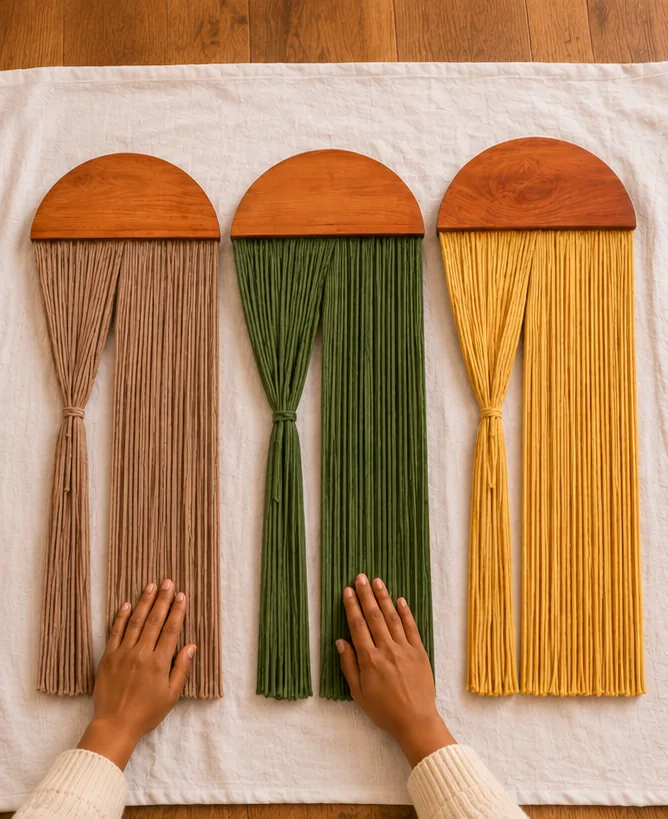
1. Lay it flat 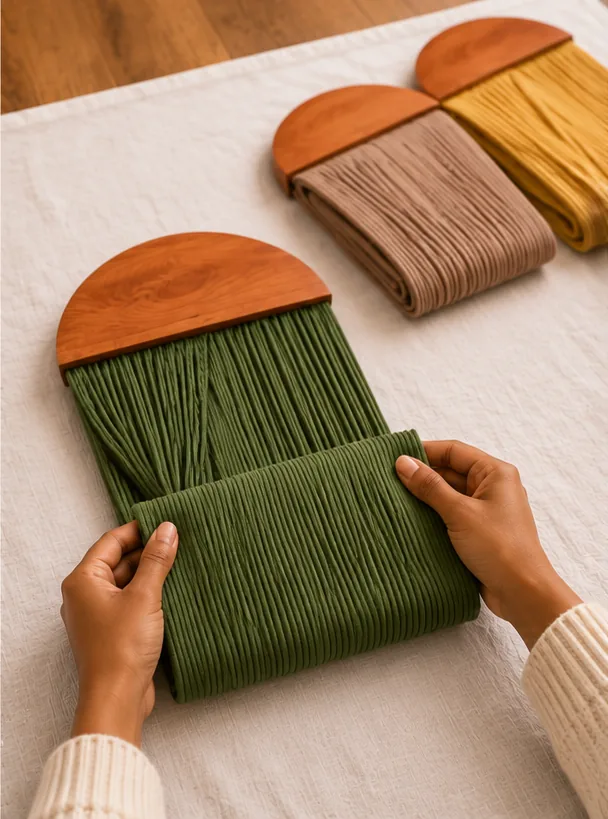
2. Roll it loosely 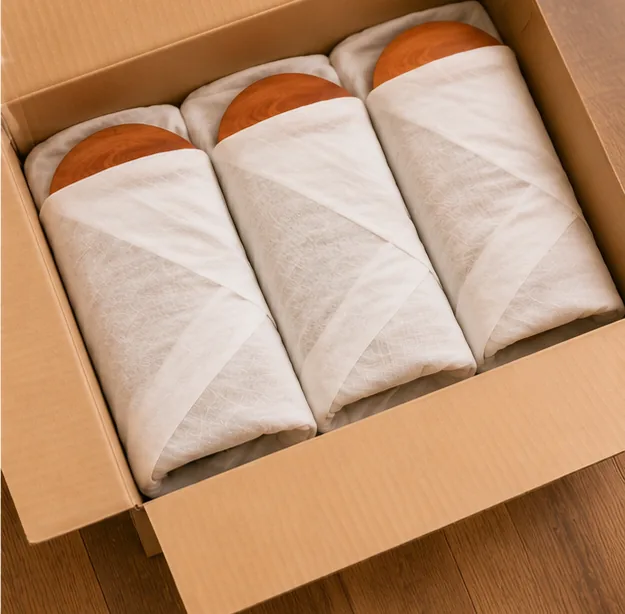
3. Wrap and box
Why cotton behaves this way
Everything above comes down to the same thing: natural cotton moves. It takes up damp and gives it back, it softens with handling, and it fades in hard light. That is also why a hand-knotted piece feels the way it does, and why no two are quite identical.